Chinese Plant Explosion Impacts HFC-based Clean Agents December 24, 2010
Posted by shawnpci in Fire Protection, Fire Systems, Uncategorized.Tags: clean agents, fire suppression
10 comments


DuPont recently notified clean agent system hardware manufacturers that HFC-based clean agents such as HFC-227-ea (branded as FM-200) and HFC-125 (branded as ECARO) could be at reduced production levels due to a plant explosion in China.
According to a recent industry newsletter, the Chinese plant where the explosion occurred produces a base raw material used in the manufacturing of HFC-based clean agents. Without continuing supplies of this base raw material, production of new agent may be affected.
The length of the disruption in the supply chain and the extent of the agent shortages is unknown. As a result, manufacturers have in many cases have passed along price increases to distributors and installers of their products.
Recycled agents are available from several EPA approved vendors, however, their supply is subject to availability of salvaged sources.
Fire Contractors Advisory Board Meets November 17 November 11, 2010
Posted by shawnpci in Fire Protection, Fire Systems.add a comment


The Iowa State Fire Marshal’s Fire Extinguishing Contractors and Alarm Systems Advisory Board is scheduled to meet Wednesday, November 17, 2010 beginning at 10:30 a.m. at the Public Safety Building, 215 East 7th Street, Des Moines, Iowa 50319, 3rd Floor State Fire Marshal Conference Room #343.
The meeting is open to the public and all are welcome to attend.
Among the topics to be discussed will be a review of the implementation of the Fire Protection Installer and Maintenance Worker Program that became effective on October 1st.
Please visit: Advisory Board Home Page for additional information and updates.
Oct 1 Starts Fire Protection Installer & Maintenance Worker Licensing September 24, 2010
Posted by shawnpci in Fire Systems, FSSA, Uncategorized.add a comment
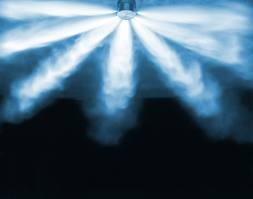 October 1, 2010 marks the start of new licensing requirements in the State of Iowa for Fire Protection Installers and Maintenance Workers. After almost three years of back and forth with the Iowa legislature and the State Fire Marshal’s office, the new requirements are finally in place and ready to take effect.
Individuals who work with various fire protection systems including fire sprinklers, special hazards systems (including pre-engineered kitchen and industrial systems) and residential water-based fire protection systems will need to be licensed. The requirements do allow for a Fire Protection and Maintenance Worker Trainee license as well.
For more information and to download a PDF copy of the application form visit: http://www.dps.state.ia.us/fm/building/fesccp/forms.shtml
Proposed Rules Hearing Date Set for July 6, 2010 May 27, 2010
Posted by shawnpci in Fire Systems, FSSA, Uncategorized.add a comment
The Iowa State Fire Marshal’s office is planning to hold a public hearing on July 6, 2010 at 9 a.m. on proposed rules for the “Licensing of Fire Protection System Installers and Maintenance Workers.”
The proposed rules would provide for the establishment and administration of the licensing program, including licensing requirements, license fess, insurance and bonding requirements, disciplinary action against licenses, application forms, examination procedures, and procedures for reporting violations of the rules.
Persons who wish to make oral presentation at the public hearing should contact the Agency Rules Administrator at least one day prior to the public hearing. Any written comments or information regarding these proposed rules may be directed to the Agency Rules Administrator at the hearing or by 4:30 p.m. the day of the hearing.
The address for the State Public Safety Headquarters Building is 215 East 7th Street, Des Moines, IA 50319. Additional contact information is available at http://www.dps.state.ia.us/fm/index.shtml
Protex Central Fires Up Clean and Green Demo April 24, 2010
Posted by shawnpci in Fire Systems, FSSA.Tags: clean agent, fire suppression, NFPA, Protex Central
add a comment
 We’re expanding our popular Clean and Green Fire Suppression Demonstrations to our Omaha, Nebraska location. Our next Clean and Green demonstration dates are set for Tuesday, May 4 in our Urbandale, IA location and on Wednesday, May 5 in our Papillion, Nebraska offices.
If you’ve never experienced a clean agent fire suppression event, here’s your chance.
You can learn more by visiting:
Protex Central, Inc. or see a video clip at: PitchEngine
Dry-Pipe Doesn’t Mean Clean Agent April 2, 2010
Posted by shawnpci in Fire Systems, FSSA.Tags: Data Centers, Fire Systems, NFPA
add a comment
 Here are a couple of my comments regarding a recent entry found at: http://www.colocationblog.org/
Friend, you’re exactly correct. The notion of “dry-pipe” is a misnomer for inferring that clean agent fire suppression is in place. Moreover, the installation of fire sprinklers is to meet a building code – not the operational objectives of a datacenter (how many 9’s is it?)
One point of clarification – neither Halon 1301, FM-200, Novec 1230 or other clean agents listed for total flooding applications deplete oxygen in a protected space. In the case of Halon 1301, it chemically interrupts the chain of combustion (See NFPA 12A appendix for more information). The other noted agents essentially absorb heat to suppress the fire (See NFPA 2001 for more information).
The idea that all gaseous agents deplete oxygen to suppress the fire flows from the way the Carbon Dioxide (CO2) systems work and, to some extent, the way Hollywood portrays the technology. CO2 is NOT recommend for total flooding applications where personnel may be present (See NFPA 12 for important safety requirements).
This topic is very timely. Read more about Google’s recent datacenter fire at my blog: shawnpci.wordpress.com
Ain’t No April Fools Joke April 2, 2010
Posted by shawnpci in Fire Systems, FSSA.Tags: Data Centers, Fire Systems, FSSA
add a comment

To quote Jerry Garcia…”what a strange trip it’s been.”
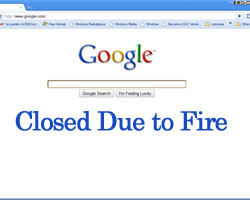
Rarely have two events conspired on the same day to bring into sharp focus the reality of our electronic connectedness: Google Data Center Fire and Windstream Outage.
Both unfortunate situations point out just how vulnerable we are in the electronic age. Despite what I’m sure were days if not months of planning and double checking, the systems put in place to safeguard systems and facilities failed.
In the Google case, not only was the giant brought to its technical knees, it’s being financially tormented by its advertisers.
With the Windstream outage, emergency 9-1-1 centers in Nebraska as well as a UL-listed central alarm monitoring station were literally disconnected from their constituents. The impact to public safety wasn’t limited to just the Nebraska counties affected, but the numerous central station customers locate throughout the Midwest.
Readers of my blog know that I’m all about good reliable fire protection, however, as both cases point out – it can’t hurt to consider the true total cost of ownership when assessing fire protection options in a data center or the reliability/redundancy of monitored services.
Stupid Is As Stupid Does March 19, 2010
Posted by shawnpci in Fire Systems, FSSA.Tags: Fire Systems
add a comment
I’m learning the ropes with this Web 2.0 stuff.
I want to start adding video clips to my blog for illustrative purposes on a variety of subjects. So, I signed up for a You Tube account and am starting to upload some short clips that I’ll share in coming blogs.
However, whilst on You Tube, I came across this disaster of a clip supposedly showing how a clean agent system discharges.
For the love of God, PLEASE DO NOT try this at home, office or business. This is NOT the way to handle, store, or activate a clean agent system. This dude is very lucky the cylinder, hose, pipe and nozzle didn’t break loose and scatter across his shipping floor.
To my friends in the industry, let’s find this guy and encourage him to join our trade group, the Fire Suppression Systems Association, so he can learn how not to handle pressurized cylinders.
Iowa Governor Signs Fire Protection Licensing Changes Into Law March 13, 2010
Posted by shawnpci in Fire Systems.Tags: Fire Systems
add a comment
Iowa governor, Chet Culver (D), signed Senate File 2355 into law this week. These changes correct numerous problems with previous attempts to license fire protection installers in Iowa.
Most notably, there are now separate tracks to follow for those who install water-based fire sprinkler systems, special hazard systems and pre-engineered systems. Previous versions of the law didn’t differentiate between technologies and left several loopholes that created enforcement problems.
Now, with passage of this law, the Iowa State Fire Marshal’s office will have a much better set of rule and regulations to enforce throughout the state.
To read the law, follow this link:
Stay tune for more details as this licensing law begins to take effect.
Michigan Clean Agent System Seen As Waste of Taxpayers Money February 27, 2010
Posted by shawnpci in Fire Systems.Tags: Fire Systems
add a comment
As an advocate for my industry, I have a hard time with this one…
Michigan State Representative, Rick Jones, R- Grand Ledge, has criticized the newly opened Michigan State Police facility in Lansing, Michigan as a “boondoggle and a waste of taxpayers money.”
According to detNews.com on a February 25. 2010 post, “a digital evidence room had to be redone and special fire suppression equipment installed so that, in the event of a fire alert, evidence and equipment would not be damaged by water from sprinklers.”
I say good for Michiganders and those with foresight to use clean agents in a responsible manner. Apparently this type of extravagance in protecting critical documents and evidence from fire and water ruin is too much for the representative to handle.
I know times are a bit tough nowadays, but I think it calls for more attention to critical priorities and their proper protection. Yes, clean agent systems are more expensive that basic water fire protection, but in applications such as this I ask – expensive compared to lost or damaged critical evidence?
Here’s a link to the article:
http://www.detnews.com/article/20100225/METRO/2250396/1409/metro/Michigan-State-Police-begin-move-to-facility-criticized-for-its-cost#ixzz0gm98rY7G


 Onward and Upward