Dry-Pipe Doesn’t Mean Clean Agent April 2, 2010
Posted by shawnpci in Fire Systems, FSSA.Tags: Data Centers, Fire Systems, NFPA
add a comment
 Here are a couple of my comments regarding a recent entry found at: http://www.colocationblog.org/
Friend, you’re exactly correct. The notion of “dry-pipe” is a misnomer for inferring that clean agent fire suppression is in place. Moreover, the installation of fire sprinklers is to meet a building code – not the operational objectives of a datacenter (how many 9’s is it?)
One point of clarification – neither Halon 1301, FM-200, Novec 1230 or other clean agents listed for total flooding applications deplete oxygen in a protected space. In the case of Halon 1301, it chemically interrupts the chain of combustion (See NFPA 12A appendix for more information). The other noted agents essentially absorb heat to suppress the fire (See NFPA 2001 for more information).
The idea that all gaseous agents deplete oxygen to suppress the fire flows from the way the Carbon Dioxide (CO2) systems work and, to some extent, the way Hollywood portrays the technology. CO2 is NOT recommend for total flooding applications where personnel may be present (See NFPA 12 for important safety requirements).
This topic is very timely. Read more about Google’s recent datacenter fire at my blog: shawnpci.wordpress.com
FSSA Annual Meeting Set To Begin February 21, 2010
Posted by shawnpci in FSSA.Tags: Fire Systems, FSSA, NFPA
add a comment
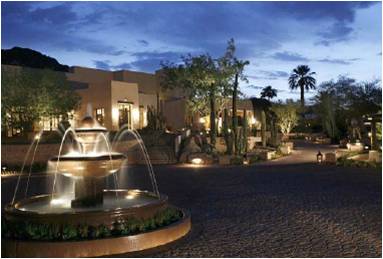 The 28th Annual Meeting of the Fire Suppression Systems Association is set to begin today at the beautiful Camelback Inn in Scottsdale, Arizona.
Over 150 industry leaders and guests are anticipated for the two and a half day meeting. An energetic agenda is planned for attendees with topics ranging from “Leveraging Technology for Increased Productivity” with Steve Turner, to panel discussion on Climate Change and Related Legislation featuring members of the FSSA’s Public Policy Committee.
Technical presentations consisting of changes to various NFPA Codes including 2001 and 72 will be given by FSSA technical director, Tom Wysocki and other FSSA technical committee members.
The Annual Meeting concludes on Tuesday, February 24.
Does NFPA 70E Apply to Fire Alarm Technicians Performing Final Hook-ups And Panel Testing? January 21, 2010
Posted by shawnpci in Fire Systems.Tags: NFPA
add a comment
I usually don’t rant – but in this case I’m making an exception:
Our fire alarm technicians got kicked off a job-site today because they were not wearing NFPA 70E Arc-Flash protective gear and had not completed 10 hour NFPA 70E training class.
They were at a fire alarm control panel performing final low-voltage circuit wiring terminations and panel programming. 120VAC was present in panel with panel door open. General Contractor’s job-site safety officer cited them for non-compliance and kicked them off job until they show proof of training and are appropriately dressed.
I’ve been in this racket for 25 years now and this is a new one on me.
Would appreciate any feedback or insights on why such extreme safety measures must be taken with a 24vdc control panel.
There, I’ve got it off my chest. I’m still not happy, though.
If you happen to have some insights or thoughts, let me know. I’d be very interested to know of them.
Testimony before the Iowa State Fire Marshal regarding rules implementing Iowa Acts 2008 Chap. 1094 as amended by Iowa Acts 2009 House File 400 October 13, 2009
Posted by shawnpci in Fire Systems.Tags: fire, NFPA, Protex Central
comments closed
Thursday, October 15, 2009
Des Moines, IA
Good morning. My name is Shawn Mullen. I appear this morning on behalf of my company, Protex Central, Inc. – a 43 year-young systems integrator specializing in fire, security and related systems. As president of Protex Central, I oversee an enterprise of more than 50 employees located in offices in Urbandale, Iowa and three locations in Nebraska.
I am a 24-year veteran of the fire systems industry. I am certified by the National Institute for Certification of Engineering Technicians – commonly known as NICET – at its highest level IV in the fire alarm sub-field and at level III in the special hazards sub-field. As such, I am our company’s responsible managing employee, as required by Iowa statue, for our certification as a fire alarm and as a fire extinguishing contractor.
In addition to my responsibilities with Protex Central, I am immediate past-president of the Fire Suppression Systems Association. The FSSA is an international trade association of fire system equipment manufacturers and installers, like Protex Central, who promote the use of, and seek to be the leading recognized authority on, special hazard fire protection systems; employing existing and new technologies to safeguard people, high-value assets and the environment.
In addition to my involvement with the FSSA, I’m a member of the National Fire Protection Association, the National Burglar and Fire Alarm Association, the National Independent Fire Alarm Distributors and the National Systems Contractors Association.
I have been a member of the Iowa State Fire Marshal’s Contractor’s Advisory Board since its inception in July of 2005. I was recently reappointed to another four year term. During my time on the board, I have been active and involved with the rules making process implementing both the fire extinguishing contractors licensing and the alarm contractors’ licensing laws.
The Proposed Regulations: New Chapter 276 to Iowa Administrative Code, “Fire Protection Installer and Maintenance Worker Licensing” appear to apply to individuals who install or maintain fire suppression systems that are not within the scope of “fire protection systems” as that term is defined in Chapter 100D of the Iowa Code. The proposed regulations define five separate endorsements:
• Automatic fire sprinkler system installation and maintenance
• Special hazards fire suppression system installation and maintenance
• Installation and maintenance of pre-engineered dry chemical or wet agent fire protection systems
• Installation and maintenance of pre-engineered water-based fire protection systems in one- and two-family dwellings
And
Any combination thereof.
I submit that the special hazard fire suppression systems and pre-engineered dry chemical or wet agent systems endorsements are not within the scope of “fire protection systems” that the Legislature has authorized the State Fire Marshal to regulate pursuant to Chapter 100D.
Section 100D.1(4) of the Iowa Code defines a fire protection system as follows:
“Fire protection system” means a sprinkler, standpipe, hose system, special hazard system, dry systems, foam systems, or any water-based fire protection system, either manual or automatically activated, used for fire protection purposes that is composed of an integrated system of underground and overhead piping connected to a water source. For licensing purposes only “fire protection system” does not include the water service piping to a structure or building from a city water main.”
To be clear, the systems to be addressed by the special hazards fire suppression systems installation and maintenance endorsement of the proposed regulations are not connected to a water source. In fact, these types of special hazard systems use non-water extinguishing agents such as dry chemical, wet agent, carbon dioxide, inert gases, halogenated agents such as Halon 1301, halocarbon clean agents such as FM-200 and fluorinated ketone agents such as Novec 1230.
Clearly, special hazard fire suppression systems using non-water extinguishing agents are not “fire protection systems” as defined in Chapter 100D and are thus are beyond the scope of Chapter 100D and its licensing requirements.
I, therefore, respectfully submit that subsection (b) of section 276.1(2) of the proposed regulations be deleted.
Additionally, subsection ( c) of section 276.1(2) should be deleted since pre-engineered dry chemical and wet agent fire suppression systems are not “connected to a water source” and thus beyond the scope of Chapter 100D and its licensing requirements.
However, should these subsections remain as part of the proposed regulations, I wish to point out several issues that adversely affect the installation and maintenance of special hazard systems.
It is important to remember that several of the agents, and devices used in these special hazard systems are under close scrutiny and supervision from various agencies of the federal government including the Occupational Safety and Health Administration, the Department of Transportation, The Bureau of Alcohol, Tobacco and Firearms and the Environmental Protection Agency. The mis-handling or mis-application of these agents or devices may have harmful affects on both personnel and the environment.
Regarding Exceptions 1 and 2 of the endorsement for special hazards fire suppression system installation and maintenance, the threshold of 8500 hours or more of employment is simply too long and not logical or based upon any factual industry reference.
A more reasonable threshold of 4000 hours is feasible and relative to the very reference of Level I NICET special hazards sub-field certification that must accompany this exception. Moreover, this threshold parallels training and work experience that most special hazard fire equipment manufacturers and contractors provide to new technicians entering this important sub-field of the fire protection industry.
I submit this same timeframe be adopted for Exceptions 1 and 2 of the endorsement for pre-engineered dry chemical and wet agent fire protection systems.
Regarding section 276.1(4) application fees, consideration must be given to special hazards endorsement applicants since special hazard systems incorporate a low-voltage electrical detection and control system for supervision and activation.
Persons performing installation, testing and maintenance on these alarm systems are currently regulated under Iowa Code 100C. Iowa Code 100C already requires fees including a mandatory FBI background check.
Requiring yet another FBI background check for special hazards endorsement applicants is redundant, provides no greater level of security to the public and presents an undue burden on the applicant and his or her employer. To underscore this redundancy another way, some actuation devices used to release special hazards agent containers are now regulated by the Bureau of Alcohol, Tobacco and Firearms. ATF requires persons handling these regulated devices be subjected to the very FBI background check required by these regulations.
I recommend that the State Fire Marshall revise the proposed fee structure for the special hazards endorsement to be $150 for a two-year license and credit be given for the FBI background check already on file as a result of the Chapter 100C requirement. This revised amount when annualized and added to the annualized amount for the alarm installer’s license would be equal to the annualized amount for the other endorsements of Chapter 276.
Currently, these proposed rules and regulations appear to draw very clear distinctions between each of the individual endorsements. These distinctions are very important. Each should stand on its own. Allowing reciprocity among the endorsements could place persons and property at risk from errors and mis-understanding of how the systems are designed and how they must be inspected and maintained.
For example, technicians qualifying for the special hazards endorsement are not exposed to the hydraulic considerations, installation techniques nor the mechanical operations of automatic fire sprinkler systems. Conversely, qualified fire sprinkler installers are, most likely, not licensed to inspect or maintain detection and control systems nor are they continuously aware of the various regulations from OSHA, ATF, the Department of Transportation, and the EPA that impact various special hazard systems.
I strongly recommend that the State Fire Marshal not consider the requirements for licensure as an automatic fire sprinkler installer as qualifying for the endorsements for special hazards or pre-engineered dry chemical or wet agents. To do so may well jeopardize the very safety and security these regulations seek to provide to the citizens of Iowa.
Lastly, please know that I am happy to provide a copy of these comments to the State Fire Marshal’s office and am available to provide additional background information as well as technical references on any of the noted items. Thank you for this opportunity to comment on these proposed rules and regulations.
Clean and Green Demo Slated for Oct 14th October 3, 2009
Posted by shawnpci in Fire Systems.Tags: fire, NFPA, Protex Central
add a comment


 The next Clean and Green Fire Suppression demonstration is schedule for Wednesday, October 14, 2009 from 12:00 p.m. to 1:00 p.m. at the Urbandale, IA offices of Protex Central.
We’ll cover topics ranging from uses, applications and regulations relating to clean agent fire protection.
The live fire suppression demonstration will take place in our full-functioning demonstration room and feature 3M’s NOVEC 1230 Fire Protection Fluid.
It’s a demonstration that you won’t want to miss.
Seating is limited so RSVP today!
Contact Protex Central at (800) 274-0889 or shari.mullen@protexcentral.net
Industry Meeting in Full Swing March 2, 2009
Posted by shawnpci in Fire Systems.Tags: FSSA, NFPA, wind turbines
add a comment
FSSA’s 27th Annual Meeting is is full swing here in Orlando, Florida. The first day was a tour de force of industry experts providing an excellent overview of technical issues facing our industry.
FSSA’s technical director, Tom Wysocki, provided a synopsis of relevant NFPA codes and standards that are in various stages of approval including NFPA 850 – Power Generation. Turns out this recommended practice (as opposed to a standard) is soliciting Requests on Proposals (ROP) until August 28 of this year. The next revision to 850 will incorporate new alternative power generation plants including wind, solar and geothermal.
Next, Dr. Mack McFarland of DuPont gave an excellent presentation on the Implications of Actions to Address Climate Change. He did a super job of distilling the myriad scientific issues surrounding climate change into a simple, easy to access hour-long presentation.
Dr. Mark Robin, also of DuPont, shared results of live fire test comparison testing of clean agents versus sprinklers. To no one’s surprise, the clean agent system provided complete suppression within seconds of detection while sprinklers did what they were supposed to do – control the fire. Of course, the test room was heavily damaged by heat, smoke and – you guessed it – water damage.
One of the more interesting aspects of Dr. Robin’s report dealt with the environmental impact of a “controlled” fire from sprinklers. Turns out that there are numerous nasty chemicals that are released during a fire event plus the nasties that are contained within the spent sprinkler water. Needless to say, suppressing fires with water creates its own environmental impact risks.
Finally, Tom Cortina, of the Halon Alternative Research Council, laid out the regulatory landscape that is affecting several of our fire suppressing agents. Given the recent change in Washington leadership and other states, it’s a safe bet that we’ll see more aggressive action on limiting fire suppression -based greenhouse gases regardless of their extremely limited emissions and benefit to preservation of mission critical functions and life safety.
FSSA is planning on making these entire video presentations available on-line for a fee in the very near future. Check-out out www.fssa.net for more information in the coming weeks.
Tracking Explosions Just Got Easier January 1, 2009
Posted by shawnpci in Fire Systems.Tags: dustexplosions, explosions, Fenwal, NFPA, Protex Central
add a comment
One of the special systems that Protex Central services and maintains is an explosion protection system designed and manufactured by Fenwal Safety Systems, a division of United Technologies.
Operating primarily in the grain rich area of the middle west, we have several applications that are protected with such systems. I recently came across a site that collects and tracks various dust fires and explosions from around the world.
Click here to follow the link: dustexplosions.blogspot.com
All too often, many of these situations could have been minimized or even avoided with the use of properly designed and installed explosion protection systems.
The National Fire Protection Association develops codes and standards related to explosion protection. You can learn more at their web site: www.nfpa.org


 Onward and Upward